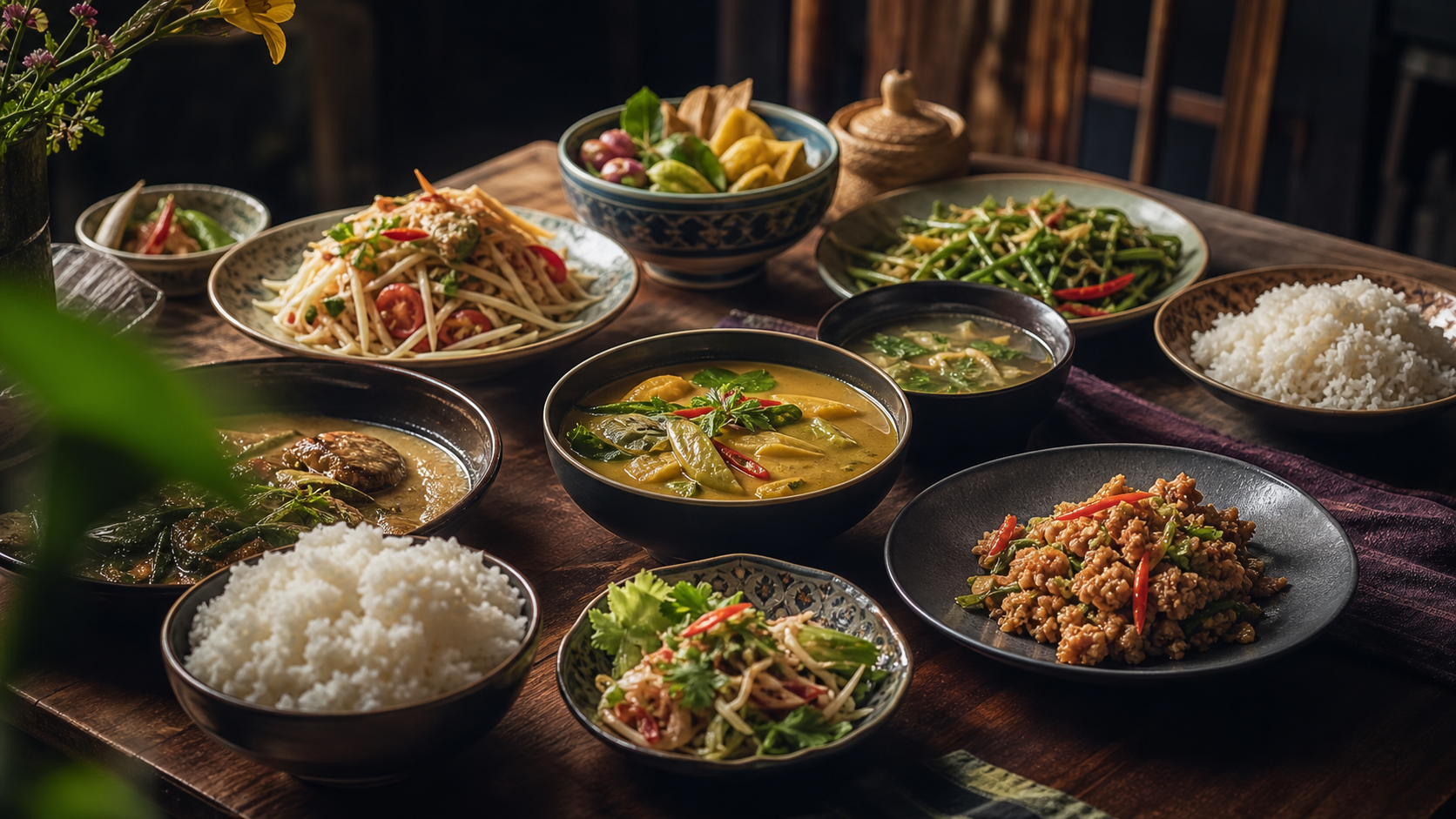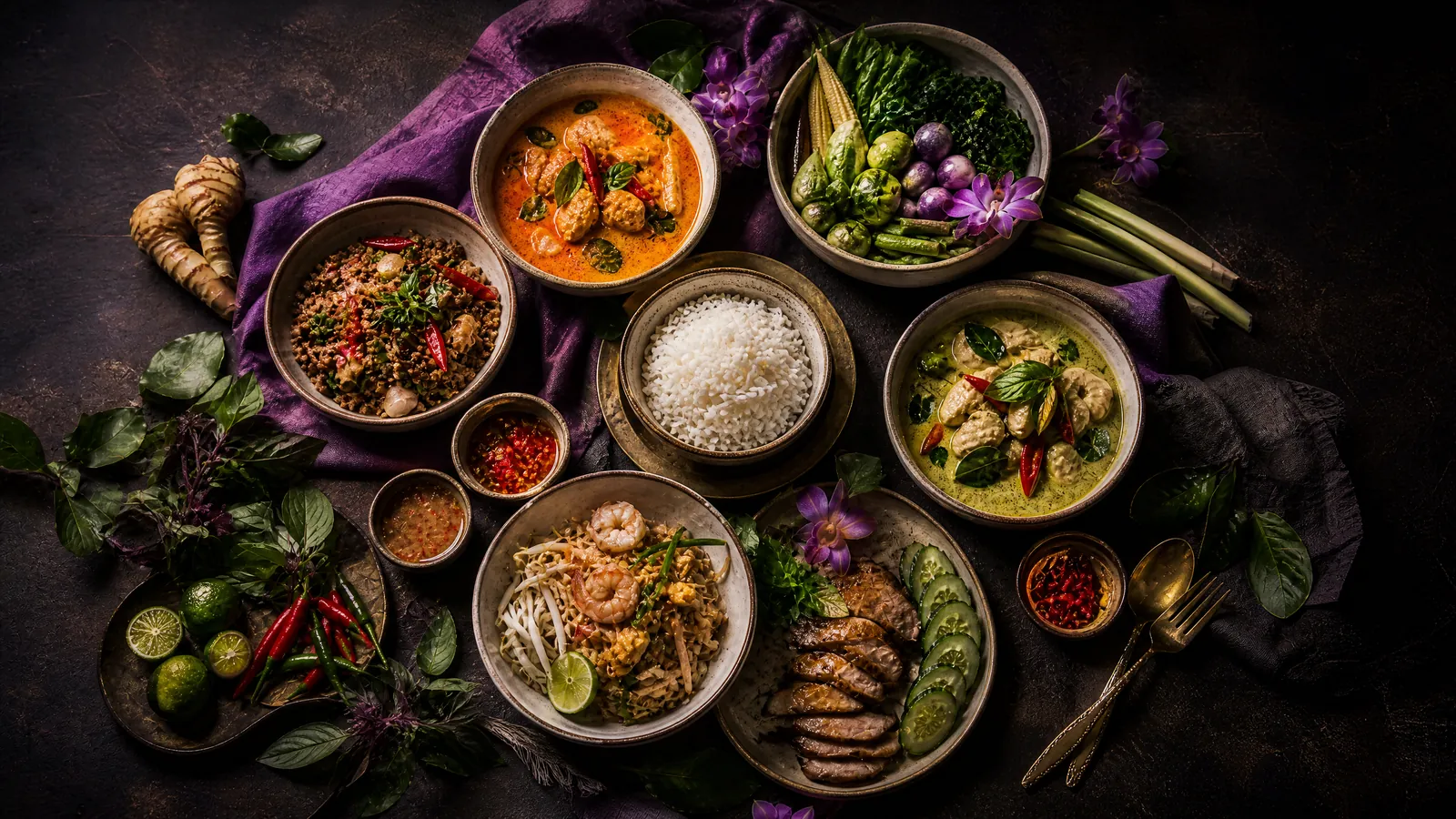
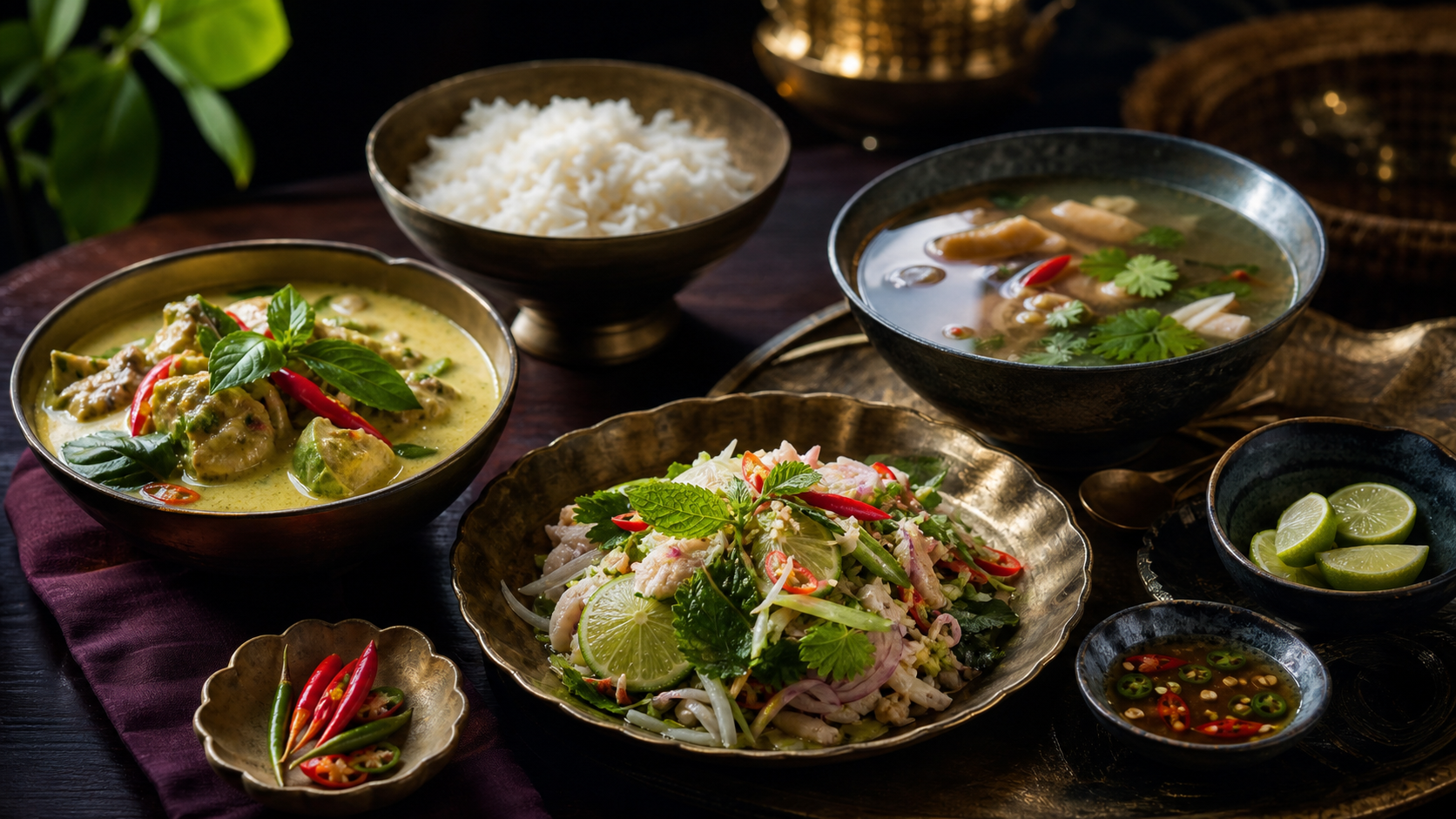
Thai cooking is famous for its interplay of sweet, sour, salty, and spicy tastes, but balance doesn’t mean sameness. It’s a living equilibrium that shifts from bite to bite and course to course. When you learn to “read” that balance—inside a single dish and across a shared table—you notice how contrast and layering create momentum in a meal. The result is food that feels bright, grounded, and deeply satisfying without being heavy.
The four pillars, working together
In Thai cuisine, sweet, sour, salty, and spicy are not four separate boxes to tick. They are levers you can move to shape mood and structure.
- Sweetness supports body and rounds sharp edges. Think palm sugar, coconut, or the natural sweetness of vegetables.
- Sourness provides lift and clarity. Lime, tamarind, and vinegars brighten richer notes.
- Saltiness carries umami. Fish sauce, soy sauce, and salted seafood concentrate savory depth so flavors travel.
- Spiciness creates pace. Fresh chilies, dried flakes, and pastes bring energy and a lingering arc of heat.
What matters is proportion. A dish may lean sour and herbal, with just enough sweetness to soften the edges, while another might be warm and savory with a prickle of chili to keep it lively. The balance you perceive changes as ingredients mix in the mouth and as you alternate dishes at the table.
How cooks layer balance inside a dish
Layering begins with a foundation. Aromatics—garlic, shallot, lemongrass, galangal, makrut lime leaf—set a direction before seasoning even starts. Salty elements typically arrive early so heat and time can amplify umami. Sweetness follows to knit textures and carry spice. Acidity lands late, often right before serving, to keep the top notes bright. Fresh herbs finish the arc, restoring lift after cooking has mellowed sharper edges.
Heat is layered too. A paste might carry a deep, steady warmth; sliced fresh chilies add spikes of heat in certain bites; a sprinkle of roasted chili flakes builds a slow afterglow. Because these layers live in different places—base, mid-palate, and finish—you get complexity without crowding.
The cook’s final act is adjustment. A quick taste test asks: Does the acid sparkle or shout? Is the sweetness supportive or syrupy? Does salt amplify or dominate? A few drops of lime, a pinch of sugar, or a flick of chili can push the dish into that poised zone where contrast feels intentional, not accidental.
Balancing a whole table: contrast by role
Thai meals are composed for harmony across dishes, not uniformity within each one. A refreshing, sour-leaning salad with crisp herbs can sit beside a richer, slower-cooked curry; a clean, aromatic broth can reset the palate between a smoky stir-fry and a punchy relish. Each plate plays a role so the table as a whole feels complete.
Rice is the quiet center. Its mildness lets bolder preparations shine without overwhelming the palate. Alternating spoonfuls of rice with concentrated flavors helps you perceive detail—citrus oils, charred notes, tiny herbal pops—that might blur if eaten alone.
When building a shared spread, aim for difference, not duplication. If one dish is creamy and warm-toned, add something crisp and sour. If another is deeply savory, include something herbal and lightly bitter. Temperature counts too: a cool, crunchy element can calm the glow of a hot, spicy one.
Aroma, texture, and temperature—the extra axes of balance
Taste is only part of the equation. Aroma is where much of the “Thai-ness” lives: citrusy leaves, peppery holy basil, toasted rice powder, smoky chili. These scents cue the brain before the first bite and can make sweetness seem sweeter or sourness brighter.
Texture acts like punctuation. Crunch interrupts richness, tender greens give relief from chew, and silky sauces make heat feel slower and more luxurious. Smart cooking toggles these textures so the meal has rhythm.
Temperature adds another layer of contrast. A steaming broth after a crisp salad, or warm rice with a cool, limey bite, changes how you register salt and heat. Slight warmth can boost aroma; a chilled element can sharpen acidity and make spice feel taut.
Calibrating heat without losing harmony
Spiciness is expressive but easy to overshoot. Instead of thinking “mild vs. hot,” think “defined vs. blurry.” You want chili heat that outlines flavors, not one that paints over them.
Start with dishes that emphasize sourness and herbs if you’re new to heat; their brightness helps you locate flavors as spice builds. As your palate warms, move to richer or saltier items that can absorb more chili without tipping bitter. Many Thai tables include condiments—chopped fresh chilies in fish sauce, vinegar with chilies, dry chili flakes, lime wedges, or a touch of sugar—so each diner can fine-tune their plate. A drop or two goes a long way; add, taste with rice, then reassess. Heat should feel like a tempo, not a dare.
A tasting roadmap for your next Thai meal
Use this simple sequence to notice balance and layering, whether you’re cooking at home or sharing a restaurant table.
- Start neutral. Take a small bite of plain rice (or a sip of water) to set a baseline.
- Taste for structure. Try a sauce or broth on its own. Ask: Which pillar leads—sour, salty, sweet, or spicy? What follows?
- Add context. Now taste the same item with its partner—rice, vegetables, or herbs. Did salt travel further? Did sour lift higher?
- Map the heat. Notice where chili lands: front-of-mouth prickles, mid-palate warmth, or a lingering finish. Pace yourself accordingly.
- Alternate dishes. Move from bright to rich, hot to cool, crunchy to silky. Contrast keeps your palate awake, so flavors seem more vivid rather than louder.
- Adjust gently. Use a squeeze of lime or a dip of salty chili condiment in small steps, always tasting with rice to check whether you’ve kept the equilibrium.
Reading Thai flavor balance isn’t about memorizing ratios. It’s a habit of attention—watching how tastes, aromas, textures, and temperatures interact. With practice, you’ll start composing meals that feel complete and pacing your bites so each dish can sing in its register.
If you’d like to practice these ideas in Midtown Manhattan, Topaz Thai Authentic is at 127 W 56th Street, New York, NY 10019. The restaurant is open daily from 12 PM to 10 PM. For details, call (212) 957-8020 or visit the official website at https://topazthainyc.com.