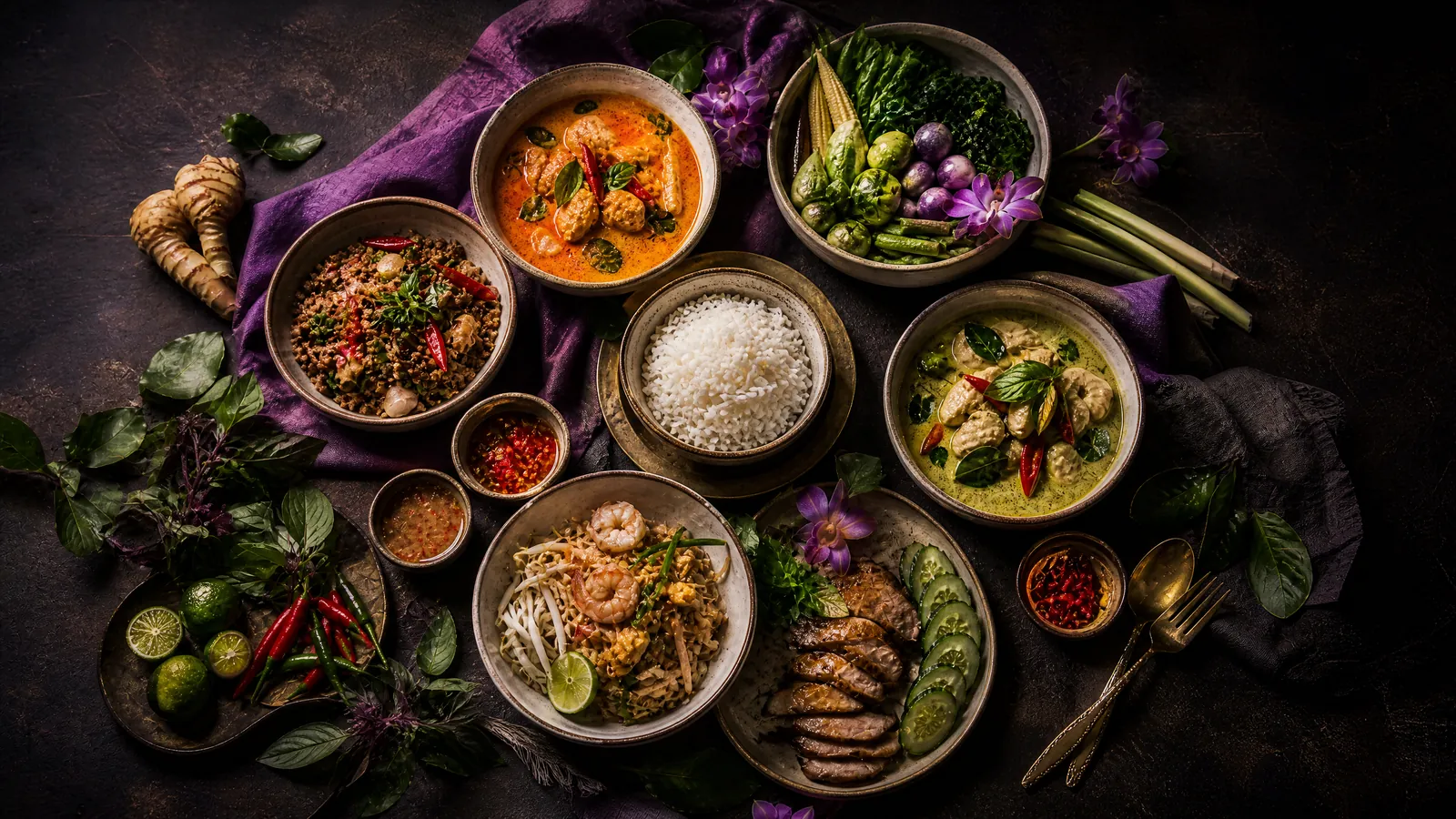
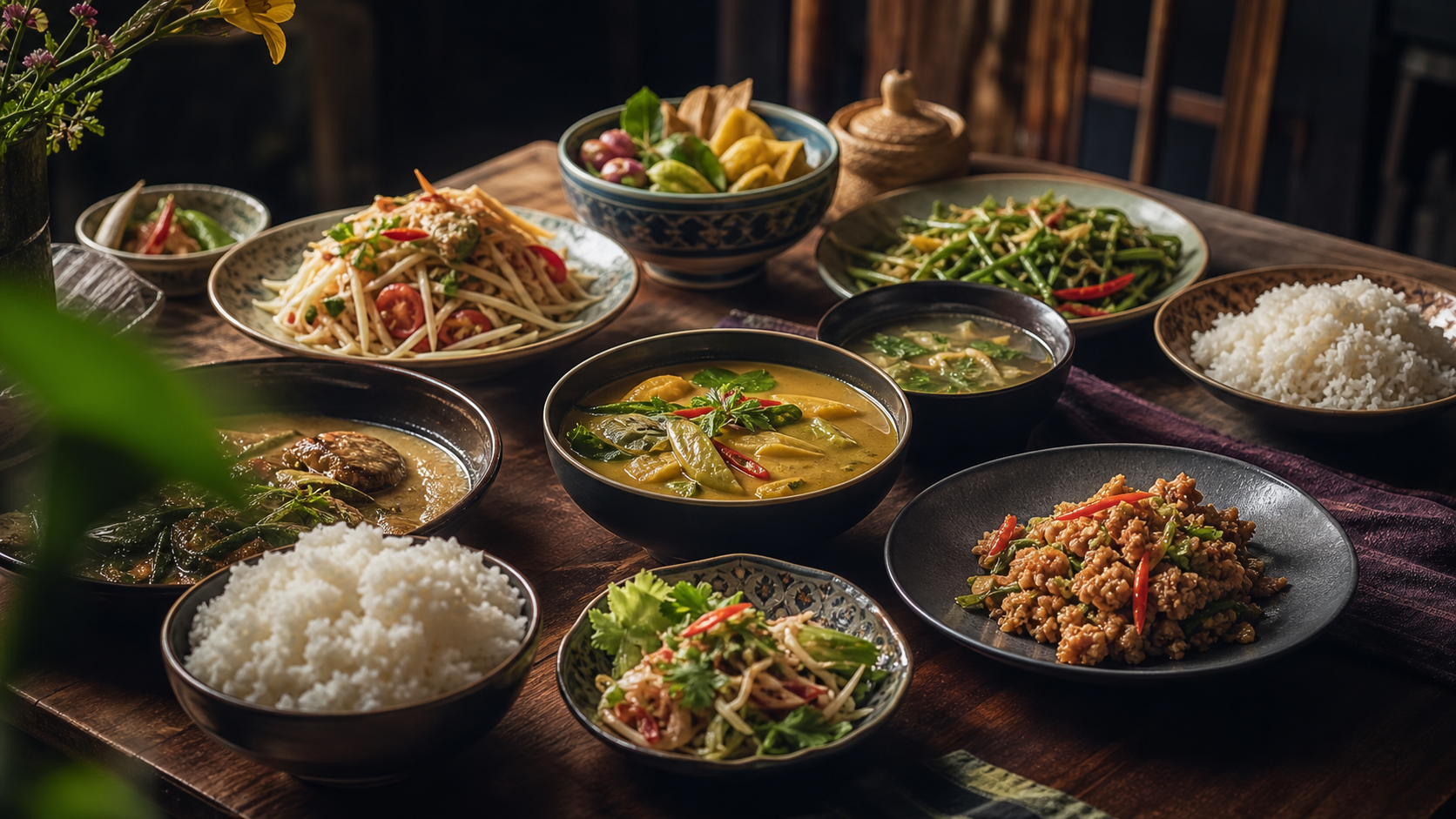
Thai meals are often described as social and abundant, with small tastes that encourage conversation as much as nourishment. Customs vary by region, family, and occasion, so there is no single rulebook. What many diners notice, however, is how frequently dishes are set in the middle so everyone can sample a range of flavors together.
Why sharing appears so often
When people gather, sharing allows the table to offer more variety than a single plate. A group can enjoy multiple spice levels, textures, and cooking methods at once. Each person builds a small, personal serving from the shared dishes, adjusting as the meal unfolds.
It is also flexible. On busy days, individually portioned plates are common. At longer meals, sharing becomes a way to connect across ages and roles, making space for conversation as dishes circulate.
The table as a shared flavor map
Thai dining culture often views the table as a shared flavor map. Balance emerges across the meal rather than within one dish. Instead of asking a single item to provide brightness, richness, texture, and heat, the whole spread works together.
- Heat and freshness: chiles, lime, and herbs bring lift.
- Depth and roundness: slow-simmered curries and braises supply comfort.
- Texture and snap: stir-fries and grilled items add contrast.
- Savory anchors: fish sauces, pastes, and dips (nam prik) welcome vegetables and proteins.
Because variety is built into the spread, sharing feels natural: a spoonful of something bright, then a richer bite, then a crisp contrast.
How dishes are placed and eaten together
Rice typically anchors the meal. Each diner receives rice first, then adds small tastes from shared plates on top or alongside. The goal is not a towering plate, but steady variety in modest bites.
Utensils guide the rhythm. For most rice-based meals, many diners use a spoon and fork: the fork helps move food onto the spoon, and the spoon does the eating. Chopsticks commonly appear with noodle soups and certain noodle dishes.
Serving etiquette stays simple:
- Use a serving spoon when provided.
- If none is present, portion carefully with your own clean spoon and avoid contact between used utensils and the shared dish.
- Soups are often set down for everyone, then ladled into personal bowls.
- Grilled or fried items may be cut into pieces so the plate keeps circulating.
Regional and household variations
No single custom applies to every table. In many northern and northeastern households, sticky rice is a daily staple and is paired with dips, grilled meats, or herb-forward salads. In central regions and Bangkok, steamed jasmine rice is common for everyday meals. Coastal areas often feature seafood and fresh herbs, while inland areas may highlight foraged vegetables and local chili pastes.
Urban schedules can turn lunch into a quick, individual affair, while weekend gatherings tend to lean family-style. Preferences shift by generation as well: some diners keep spice levels gentle; others seek more heat. The diversity of rhythms is part of the appeal—and a reminder to avoid blanket statements.
Practical etiquette for shared Thai meals
These guidelines are common in many settings. When in doubt, follow your host or the group’s lead.
- Start small: take modest portions so everyone can taste each dish; return for seconds as needed.
- Balance your bites: alternate richer items with fresh, crunchy, or sour components to keep the palate lively.
- Mind serving utensils: use them when available; if not, portion with your clean spoon and avoid double-dipping.
- Soup sense: ladle soup into your own bowl rather than sipping from the shared pot.
- The last-bite pause: before taking the final piece on a platter, check whether others would like it.
- Rice as anchor: build each bite around rice so flavors integrate rather than compete.
- Adjust at your plate: if condiments are on the table—chiles, lime, sugar, vinegar—season your own portion instead of changing the shared dish.
Planning a shared Thai meal in Midtown Manhattan
If you are coordinating a group meal near Midtown, a few planning steps can keep the table flowing:
- Aim for range: include something bright and herbal, something rich, something crisp, and a soup.
- Set expectations: agree on spice levels and any dietary needs before ordering.
- Serve rice first: it helps pace the meal and keeps flavors balanced.
- Circulate clockwise: pass shared dishes in one direction so everyone gets a turn.
Practical details for readers planning around West 56th Street:
- Topaz Thai Authentic is at 127 W 56th Street, New York, NY 10019.
- Hours: Daily, 12 PM–10 PM.
- Phone: (212) 957-8020.
- Website: https://topazthainyc.com
Quick FAQs about shared Thai dining
Is it rude not to share Thai food?
Not necessarily. Many meals are shared, but individual plates are common too—especially at quick lunches. Follow the situation and the group’s lead.
Do Thai meals always come with rice?
Rice is central to many meals and often served first. That said, noodle dishes and other one-plate options are also part of everyday eating.
Do people use chopsticks for Thai food?
Often for noodle soups and some noodle dishes. For rice-based meals, a spoon (for eating) and fork (for guiding) are common.
How many dishes should a group order?
A simple rule of thumb is one shared dish per person, plus rice and perhaps a soup—then adjust based on appetite and variety.
The shared table, thoughtfully
Communal Thai dining is less about strict rules and more about rhythm: flavors, textures, and conversation moving in turn. Not every household shares every meal, and not every group prefers the same balance. Yet when dishes meet in the middle and each diner builds small, evolving bites, the meal becomes a collective story—generous, flexible, and tuned to the company at the table.