The Foundation of Thai Curries: A Symphony of Aromatics
Thai cuisine is celebrated globally for its intricate balance of flavors—sweet, salty, sour, and spicy—and nowhere is this harmony more evident than in its curries. Unlike the powder-based curries found in other culinary traditions, traditional Thai curries are built upon a foundation of freshly pounded pastes. These pastes are a labor of love, combining aromatic herbs, pungent roots, and vibrant chilies to create a concentrated flavor base that defines the character of the final dish. The process of pounding the ingredients releases essential oils, ensuring that the resulting paste is intensely fragrant and deeply flavorful.
At the heart of almost every Thai curry paste are core ingredients like lemongrass, galangal, makrut lime leaves, garlic, and shallots. The distinct colors and flavor profiles emerge from the specific types of chilies and additional spices introduced into the mortar and pestle. When these pastes are simmered with rich, creamy coconut milk, they transform into the luxurious sauces that coat tender meats, seafood, and crisp vegetables. For diners exploring Midtown Thai food, understanding these foundational elements offers a deeper appreciation for the culinary artistry presented in every bowl.
Green Curry: Herbaceous, Bright, and Complex
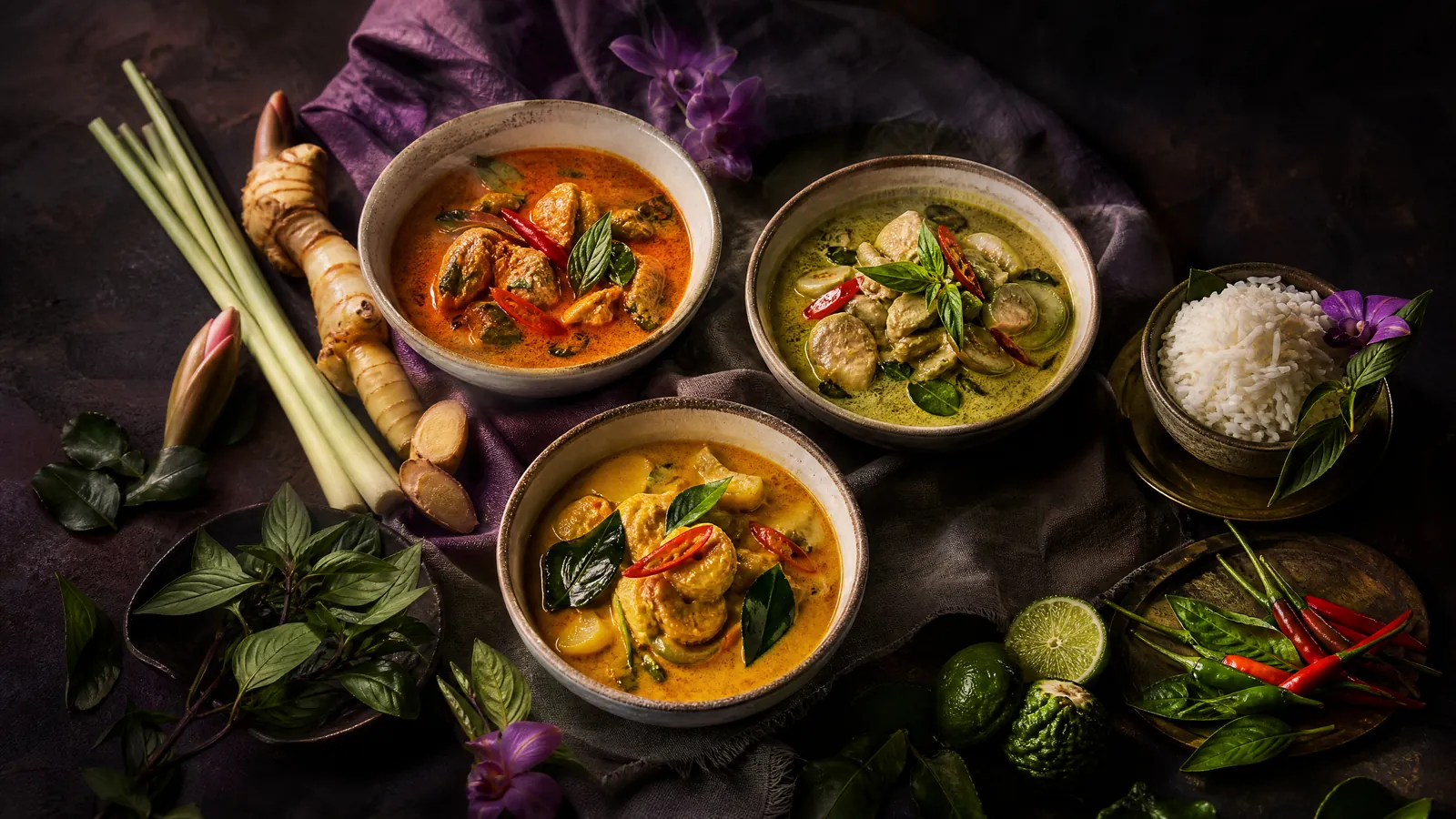
Often considered one of the most recognizable Thai dishes, green curry, or kaeng khiao wan, translates to "sweet green curry." However, the "sweet" refers to the specific shade of green rather than the flavor profile, which is typically quite fiery. The vibrant hue is derived from an abundance of fresh green chilies, which provide a sharp, immediate heat that dances on the palate. This fresh chili base is what distinguishes green curry from its dried-chili counterparts, offering a lively and invigorating culinary experience.
Beyond the chilies, green curry paste incorporates fresh coriander roots, basil, and makrut lime leaves, lending the dish an intensely herbaceous and bright aroma. The addition of coconut milk mellows the heat slightly, creating a beautifully balanced sauce that is both rich and refreshing. Traditionally served with chicken, beef, or fish dumplings, green curry is often accompanied by Thai eggplant and bamboo shoots, which absorb the fragrant sauce.
Red Curry: Bold, Fiery, and Deeply Savory
If green curry is defined by its fresh herbs, red curry (kaeng phet) is characterized by its bold, robust depth. The striking crimson color comes from the generous use of dried red chilies, which are soaked and pounded into the paste. While it might appear intimidatingly spicy, the heat of a red curry is often more of a slow, warming burn compared to the sharp bite of its green counterpart. The drying process of the chilies concentrates their flavor, resulting in a more mature and earthy heat profile.
The flavor profile of red curry is deeply savory, anchored by the earthy notes of cumin, coriander seeds, and shrimp paste. This creates a versatile base that pairs exceptionally well with a wide variety of proteins, including roasted duck, beef, pork, and shrimp. The richness of the coconut milk is often cut by the addition of sweet basil and bamboo shoots, resulting in a complex, multi-layered dish.
Yellow Curry: Warm, Mild, and Comforting
Drawing influence from Indian and Middle Eastern culinary traditions, yellow curry (kaeng kari) stands apart from its red and green siblings through its use of dried spices. The defining ingredient is turmeric, which imparts a brilliant golden-yellow hue and a warm, earthy flavor. Alongside turmeric, the paste often features curry powder, coriander, cumin, and sometimes a hint of cinnamon or cardamom. This unique blend of spices creates a fragrant profile that is distinctively different from the fresh-herb focus of other Thai curries.
Yellow curry is generally the mildest of the primary Thai curries, making it an excellent introduction for those who prefer less heat. The flavor is rich, slightly sweet, and immensely comforting, often likened to a warm culinary embrace. It is most commonly prepared with chicken and hearty root vegetables like potatoes and carrots, which simmer until tender, soaking up the fragrant, golden sauce.
Panang and Massaman: Rich Variations on Classic Themes
While red, green, and yellow are the most commonly referenced colors, the Thai curry spectrum includes other variations that deserve attention. Panang curry is a richer, sweeter, and drier variation of red curry. Its paste includes the addition of roasted peanuts, which lend a nutty depth and a thicker texture to the sauce. Panang is typically less spicy than standard red curry and is often served with beef or chicken, garnished with finely sliced makrut lime leaves for a burst of citrus aroma.
Massaman curry, another rich and complex dish, reflects Persian and Indian influences. It is unique in its heavy reliance on dry spices like cardamom, cinnamon, cloves, and nutmeg, which are rarely used in other Thai curries. The result is a mildly spicy, slightly sweet, and deeply aromatic dish, traditionally featuring beef or chicken, potatoes, and roasted peanuts. Both Panang and Massaman showcase the incredible versatility and regional diversity of Thai curry traditions.
Experiencing Authentic Thai Curries in Midtown Manhattan
For those living in or visiting New York City, experiencing the nuanced differences between these curries is a delightful culinary journey. Whether you are drawn to the herbaceous heat of a green curry, the savory depth of a red curry, or the comforting warmth of a yellow curry, each dish offers a unique window into Thailand's rich gastronomic heritage. Exploring these flavors allows diners to appreciate the meticulous preparation and balancing of ingredients that define authentic Thai cooking.
Located in the heart of the city, Topaz Thai Authentic invites you to explore these vibrant flavor profiles in a warm and welcoming environment. Situated at 127 W 56th Street, New York, NY 10019, we have been proudly Serving You Since 1992. Open daily from 12 PM to 10 PM, our kitchen prepares traditional curries with care and authenticity. Whether you prefer dine-in, takeout, delivery, catering, or are planning private events, we welcome you to join us. For inquiries, please call (212) 957-8020, and allow us to share the authentic tastes of Thailand with you.