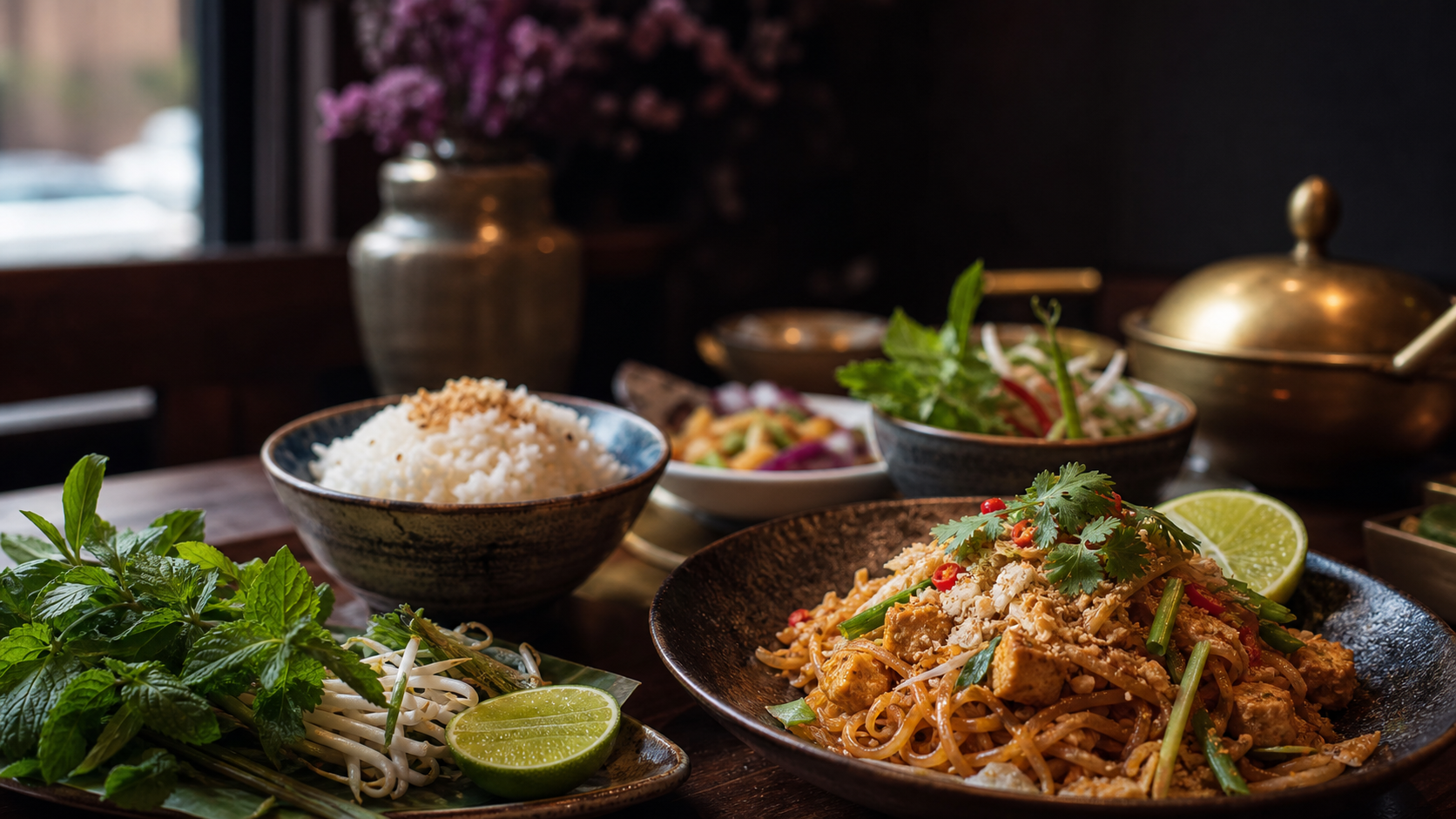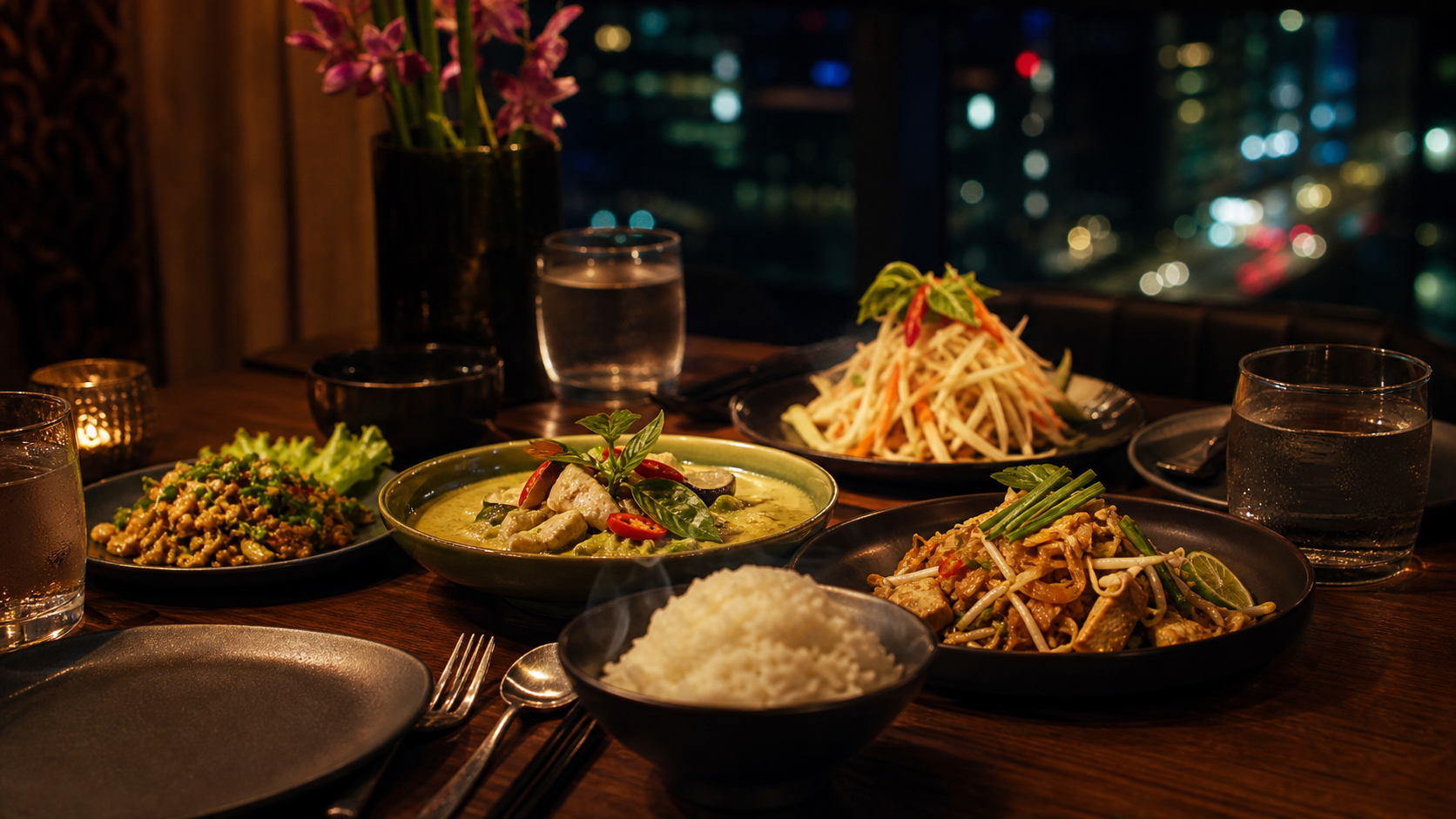
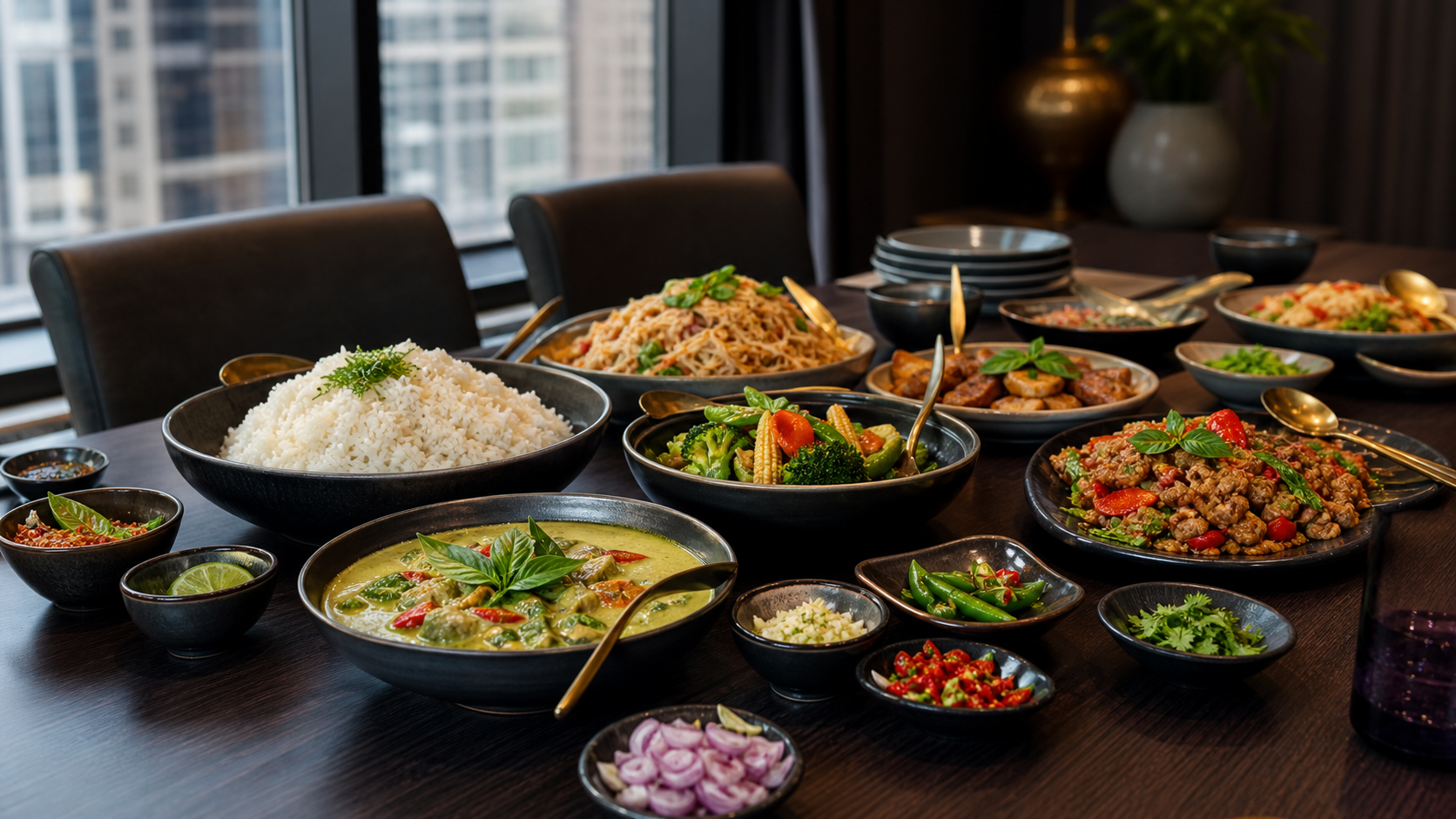
Hosting an office gathering in Midtown Manhattan usually comes with a familiar set of constraints: tight timelines, limited setup space, and a group with varied tastes and dietary needs. Thai cuisine can be a practical fit because it lends itself to shareable spreads, layered flavors, and flexible packaging. With a focused plan and clear communication, you can serve a lunch that’s easy to set up, quick to distribute, and considerate of everyone at the table.
Shareable formats that fit Midtown offices
Selecting a service format shapes everything else—budget, setup time, labeling, and clean‑up.
- Family‑style platters — good for teams that want to sample and share. Platters reduce packaging volume and encourage variety at each table. Plan for serving utensils and position trays so foot traffic flows in one direction. Ask whether sauces can be packed on the side and labeled clearly.
- Individually boxed meals — helpful for training sessions, standing meetings, or limited seating. Boxes simplify distribution and reduce queueing, but you’ll want accurate headcounts and clear labels so everyone gets what they expect.
- Hybrid approach — combine family‑style items with a limited run of individually boxed meals to accommodate strict dietary needs without segmenting the entire group.
Whichever format you choose, confirm labeling and separate packaging for sauces and condiments. That single detail makes sharing smoother and helps accommodate guests with dietary restrictions.
Estimating quantities with less guesswork
Exact yields vary by kitchen and dish, so confirm portion guidance with the restaurant. Use these habits to right‑size your order before you ask for specifics:
- Lock the headcount and add a modest 5–10% buffer for last‑minute attendees.
- Use a starting ratio, then adjust: roughly 40% mains, 30% starches (rice or noodles), 20% vegetables/salads, and 10% lighter sides. Tweak by meeting length and appetite.
- Match format to session type: for a 30–45 minute working lunch, smaller menus and individual boxes reduce lines and speed distribution. For a 60–90 minute team social, family‑style variety supports conversation.
- Map containers to servings: ask what each tray is intended to serve and align quantities to your ratios. When unsure, a little extra rice and vegetables is more universally appreciated than additional spicy mains.
Document choices in a quick spreadsheet—headcount, format, dish category, expected servings, dietary notes, and final quantities. That prep makes the ordering call efficient and reduces miscommunication.
Ordering questions that streamline the process
A well‑structured five‑minute call or email can save time on the day of your event. Consider this checklist:
- Lead times and cutoffs: preferred notice for your headcount; any same‑day or next‑day windows.
- Delivery and access: the building address and serving window; whether the driver can text upon arrival; notes about your lobby, security desk, or freight elevator.
- Packaging and labeling: whether hot items are vented; sauces/condiments on the side; labels with dish names and common allergens.
- Serving gear: availability of tongs, ladles, serving utensils, plates, cutlery, and napkins on request.
- Temperature and timing: recommended window from kitchen to table; flexibility if your agenda shifts.
- Order changes and payment: policies for headcount increases or cancellations; accepted payment methods; whether tax‑exempt forms or purchase orders can be accommodated.
Share the answers with your meeting lead so everyone understands the plan.
Clear dietary communication
Thai kitchens commonly use ingredients such as peanuts, tree nuts, shellfish, soy, wheat (gluten), fish sauce, egg, and chiles. Identify needs in advance and put them in writing. A concise note might include your headcount, service format, and requests for options packaged and labeled for:
- Vegetarian
- Vegan
- Gluten‑free
- Dairy‑free
- Nut‑free (peanuts/tree nuts)
- Shellfish‑free
Ask that labels flag peanuts, tree nuts, shellfish, soy, egg, or gluten. If a dish can be prepared without a common allergen, request that notation on the label. Internally, keep a simple distribution plan so guests who requested accommodations receive the correct meal without delay. For family‑style setups, place clearly labeled items in a distinct section of the table.
Midtown timing and building logistics
Midtown West and Midtown East tend to be busiest from about 11:45 AM to 1:45 PM, when streets, lobbies, and elevators can slow deliveries. Plan with these realities in mind:
- Reserve access: if your building requires vendor registration, arrange it at least a day ahead and share the day‑of contact’s name and mobile number.
- Add a buffer: schedule delivery 15–25 minutes before service to account for traffic and elevator waits.
- Stage the room: identify a clear surface for setup, a separate spot for beverages, and a one‑way traffic pattern that moves guests past plates, mains, sides, condiments, and utensils.
- Cleanup plan: assign a lead and confirm whether leftovers should be consolidated or donated per company policy.
Day‑of labels, layout, and flow
Good labeling and smart layout keep lines short and conversations going. Lock in these details the day before:
- Card labels with dish names plus key markers (vegan, vegetarian, gluten‑free). Place labels at the front left of each tray for visibility.
- Distinct utensils for each tray to avoid accidental mixing.
- Heat and freshness: keep lids closed until guests arrive; open just before serving to retain heat.
- Communications: post a quick note in your team chat with the menu overview, room location, and serving window so arrivals are paced.
Local resource and quick FAQ
If you’re exploring Thai options for a group order near Midtown, you can contact Topaz Thai Authentic to discuss packaging, timing, and labeling for large orders. Verified details:
- Address: 127 W 56th Street, New York, NY 10019
- Hours: Daily, 12 PM–10 PM
- Phone: (212) 957‑8020
- Website: https://topazthainyc.com
Frequently asked questions:
- How far in advance should I place a Thai office catering order in Midtown? Lead times vary by headcount and format; many restaurants appreciate 24–48 hours’ notice. For small orders, earlier same‑day windows may be possible—call to confirm availability.
- Can Midtown buildings accommodate hot food deliveries? Most can, but check with building management about vendor registration and freight elevator access. Share your contact info with the delivery team and schedule a clear arrival window.
- What information should I have ready when I call? Your date, headcount, address, delivery window, preferred service format (family‑style, boxes, or hybrid), dietary notes, and payment method.
Wrap‑up: Choose an appropriate shareable format, ask targeted ordering questions, and document dietary needs in writing. With those pieces in place—and a small buffer in your timeline—you’ll deliver a Midtown office lunch that’s efficient to serve and considerate of everyone’s requirements.
Publisher note for your CMS: set the page title as H1 and use H2s for the sections above. If structured data is supported, apply LocalBusiness schema to the Topaz Thai Authentic details using the verified address, phone, hours, and website listed here.